
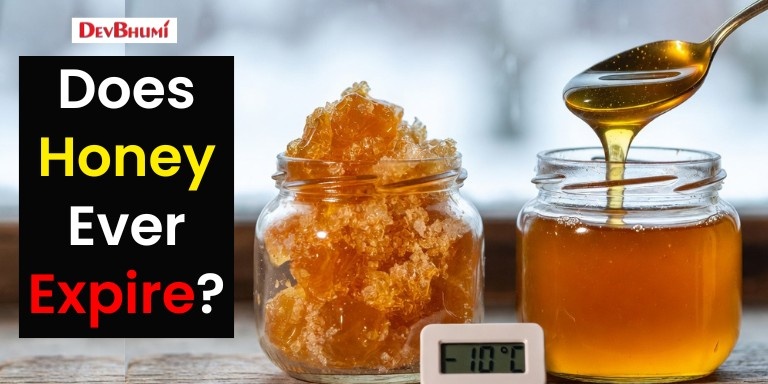
Does Honey Ever Expire? Truth Explained
-
By: admin
- January 9, 2026
Overview
Honey is one of the most fascinating natural foods on Earth. You may have seen jars of honey with expiry dates printed on them, or even heard stories of thousands-year-old honey found in ancient tombs that was still edible. This naturally raises an important question:
Does honey ever expire?
Let’s uncover the real truth, backed by science—not myths.
The Short Answer: No, Pure Honey Does Not Expire
Pure, raw, and properly stored honey never expires.
It may change in color, texture, or crystallize, but it does not spoil or become unsafe to eat.
In fact, archaeologists discovered honey in ancient Egyptian tombs (over 3,000 years old) that was still preserved and edible. This is possible because honey has natural preservation properties that prevent the growth of bacteria and microorganisms.
Why Honey Never Spoils?(Science Behind It)
Honey’s long shelf life is due to a unique combination of natural factors:
- Low Moisture Content
Honey contains very little water (usually below 18%).
Bacteria and fungi need water to grow—without it, they cannot survive.
- High Natural Sugar
The high sugar concentration creates an environment where microorganisms are dehydrated and destroyed.
- Natural Acidity
Honey has a low pH (around 3.2–4.5), making it acidic enough to kill most bacteria.
- Enzymes from Bees
Bees add an enzyme called glucose oxidase, which produces small amounts of hydrogen peroxide—another natural preservative.
Because of these four factors, pure honey is naturally antibacterial and self-preserving.
Then Why Do Honey Jars Have Expiry Dates?
Good question.
Expiry dates on honey jars are usually added because:
Food laws require packaged products to show a “Best Before” date
Manufacturers want to ensure quality, not safety
Processed or adulterated honey may degrade over time
The expiry date refers to quality, not safety.
After the “best before” date, honey may:
Crystallize
Darken in color
Lose some aroma
But it is still safe to consume if it’s pure.
What About Crystallized Honey? Is It Spoiled?
Absolutely not.
Crystallization is a natural process, especially in raw or organic honey.
Why Honey Crystallizes:
Natural glucose separates from water
Cold temperatures speed up crystallization
Raw honey crystallizes faster than processed honey
Crystallized honey is actually a sign of purity, not spoilage.
How to Fix It:
Place the jar in warm water
Stir gently until it becomes liquid again
Never boil or microwave aggressively—it destroys nutrients.
Can Honey Ever Go Bad?
Yes—but only in rare cases.
Honey can spoil only if:
Water is added (moisture contamination)
Stored in an open or wet container
Mixed with saliva (using a wet spoon)
It is fake or adulterated honey
Signs of spoiled honey include:
Fermentation smell (sour or alcohol-like)
Foaming on the surface
Unusual taste
Properly stored pure honey will not spoil.
How to Store Honey Correctly?
To ensure honey lasts forever:
✔ Store in an airtight container
✔ Keep away from moisture
✔ Use a dry spoon
✔ Store at room temperature
❌ Do not refrigerate
Glass jars are best for long-term storage.
Final Verdict
✔ Pure honey does not expire
✔ Changes in texture or color are natural
✔ Crystallization = purity
✔ Expiry dates are for quality, not safety
If you’re consuming raw, organic, and unadulterated honey, you can enjoy it safely—even years later.
FAQs: Does Honey Ever Expire?
Can I eat honey after the expiry date?
Yes. If the honey is pure and properly stored, it is safe to eat even after the expiry date.
Why does honey crystallize in winter?
Cold temperatures cause natural sugars to crystallize. This is normal and shows purity.
Can expired honey make you sick?
Pure honey will not make you sick. Only contaminated or fermented honey can cause issues.
How long does raw honey last?
Raw honey can last a lifetime if stored correctly.
Is crystallized honey better than liquid honey?
Yes. Crystallization often indicates raw and minimally processed honey.
We want to give you 10% discount for your first order,
Use discount code at checkout

We want to give you 10% discount for your first order,
Use discount code at checkout
Written by
admin
The author has not added a bio yet.