
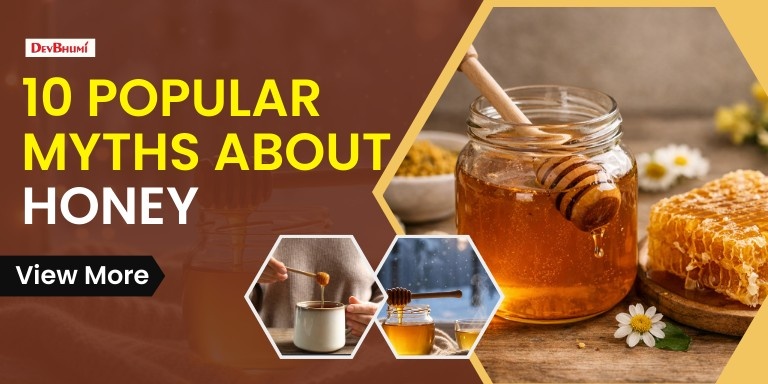
10 Popular Myths About Honey – That You Should Stop Believing
-
By: admin
- December 17, 2025
Overview
Honey has been used for thousands of years as food, medicine, and a natural sweetener. From ancient Ayurveda to modern wellness trends, honey is often seen as a “miracle food.” But with popularity comes misinformation. Many people consume honey daily while believing myths that can mislead their health choices, purchasing decisions, and storage habits.
In this article, we will break down the most common myths about honey, explain the truth behind them, and help you make better, informed decisions when buying and consuming honey.
Myth 1: Honey Never Expires
This is one of the most widespread myths.
Truth:
Pure honey does not spoil easily, but that does not mean it is immortal. Honey has a very long shelf life because of its low moisture content, natural acidity, and antibacterial properties. Archaeologists have even found edible honey in ancient Egyptian tombs.
However, over time, honey can:
- Darken in color
- Lose aroma and flavor
- Crystallize naturally
If honey is stored improperly (exposed to moisture, heat, or contamination), it can ferment or degrade in quality.
Key takeaway:
Honey doesn’t spoil like milk or fruits, but proper storage is essential to maintain its quality.
Myth 2: Crystallized Honey Is Fake or Spoiled
Many consumers panic when honey turns thick, grainy, or solid.
Truth:
Crystallization is a natural and positive sign of pure honey. It happens because honey contains natural sugars like glucose, which crystallize over time.
Factors affecting crystallization:
- Floral source
- Temperature
- Natural glucose content
Ironically, most adulterated or highly processed honey does not crystallize easily.
How to fix crystallized honey:
Place the jar in warm water (not boiling) and gently stir. Avoid microwaving, as it can destroy nutrients.
Key takeaway:
Crystallized honey is not spoiled—it often indicates purity.
Read More About – Is Crystallize honey fake?
Myth 3: All Honey Available in the Market Is Natural
This is a dangerous assumption.
Truth:
Not all honey sold in the market is pure or raw. Many commercial brands:
- Heat honey at high temperatures
- Filter out pollen
- Add sugar syrups or glucose
Such honey may look attractive and remain liquid forever, but it lacks enzymes, antioxidants, and nutritional value.
Raw or natural honey, on the other hand:
- Retains pollen and enzymes
- May crystallize
- Has a stronger aroma and flavor
Key takeaway:
Always check labels and source before trusting a honey brand.
Myth 4: Honey Is Completely Safe for Everyone
Honey is natural, but that doesn’t mean it suits everyone.
Truth:
Honey should never be given to infants under one year of age. It may contain spores of Clostridium botulinum, which can cause infant botulism—a serious condition.
Additionally:
- Diabetics should consume honey cautiously
- Excess consumption can increase calorie intake
Key takeaway:
Honey is healthy, but moderation and age-appropriateness matter.
Myth 5: Honey Is Just Another Form of Sugar
Many people believe honey and white sugar are the same.
Truth:
While honey is a sweetener, it is not nutritionally equal to refined sugar.
Honey contains:
- Antioxidants
- Enzymes
- Trace minerals (iron, zinc, potassium)
Refined sugar, on the other hand, provides empty calories with no nutritional benefits.
That said, honey is still a form of sugar and should be consumed mindfully.
Key takeaway:
Honey is a better alternative to sugar—but not a free pass to overconsume sweetness.
Learn More about – Switch from Sugar to Honey Today
Myth 6: Dark Honey Is Inferior to Light Honey
Color often influences buying decisions.
Truth:
Honey color depends on:
- Flower source
- Region
- Season
Dark honey often contains higher antioxidant levels and stronger flavor, while light honey tastes milder.
Neither is inferior—both have unique benefits.
Key takeaway:
Color does not define quality; purity and source do.
Myth 7: Heating Honey Makes It Toxic
This myth is often discussed in traditional circles.
Truth:
Excessive heating of honey can destroy enzymes and nutrients, but it does not turn honey into poison. Moderate warming (such as mixing with warm water) is generally safe.
However, boiling honey or cooking it at high temperatures regularly can reduce its nutritional value.
Key takeaway:
Avoid excessive heat, but don’t fear mild warming.
Myth 8: Honey Helps You Lose Weight Automatically
Honey is often marketed as a weight-loss ingredient.
Truth:
Honey alone does not burn fat. However, it can:
- Reduce sugar cravings
- Improve digestion
- Support a balanced diet
Weight loss depends on overall lifestyle, not a single food item.
Key takeaway:
Honey can support healthy habits, not replace them.
Myth 9: Thicker Honey Means Better Honey
Texture can be misleading.
Truth:
Thickness depends on:
- Moisture content
- Temperature
- Floral origin
Some pure honeys are naturally runny, while others are thick. Adulterated honey can also be artificially thickened.
Key takeaway:
Consistency alone does not prove purity.
Myth 10: All Raw Honey Tastes the Same
Many people expect uniform taste.
Truth:
Raw honey varies greatly in taste depending on:
- Flowers
- Region
- Climate
Forest honey, mustard honey, and multiflora honey all have distinct flavors and aromas.
Key takeaway:
Taste variation is natural and desirable.
Conclusion
Honey is a powerful natural food, but misinformation can prevent us from enjoying its real benefits. By understanding the truth behind these common myths, you can:
- Choose better-quality honey
- Consume it more responsibly
- Appreciate its natural diversity
Knowledge is the key to purity—not just labels or advertisements.
FAQs (Frequently Asked Questions)
Does pure honey really last forever?
Pure honey lasts for years if stored properly, but its quality may change over time.
Is crystallized honey safe to eat?
Yes, crystallized honey is completely safe and often a sign of purity.
Can diabetics consume honey?
Diabetics can consume small amounts under guidance, as honey still affects blood sugar levels.
How can I store honey properly?
Store honey in a sealed container, away from moisture, direct sunlight, and heat.
Is raw honey better than processed honey?
Raw honey retains more natural enzymes, pollen, and antioxidants compared to heavily processed honey.
We want to give you 10% discount for your first order,
Use discount code at checkout

We want to give you 10% discount for your first order,
Use discount code at checkout
Written by
admin
The author has not added a bio yet.