
What Are the Natural Sugars Found in Honey?
-
By: admin
- September 14, 2026
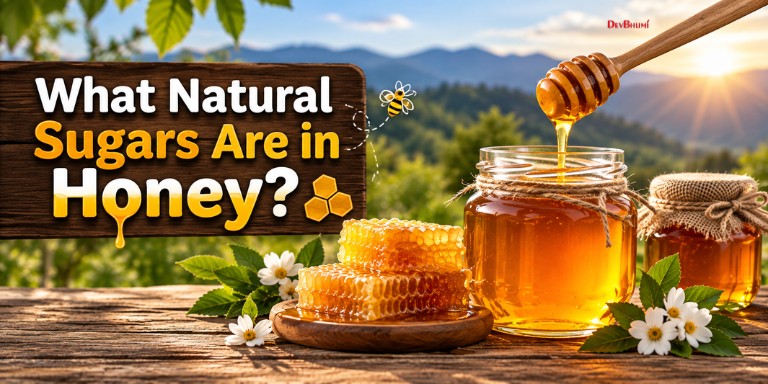
The popular name of honey is nature’s golden sweetener, but have you ever thought about what makes honey so sweet? The reason behind this sweetness of honey is its natural sugars. In comparison to white refined sugar, honey is a complicated natural product which consists of sugars, water, acid, mineral, and other minor components.
Fructose and glucose are two main types of sugars in honey, whereas the amounts of sucrose, maltose, and other sugars are present in small amounts in honey. The amount of these natural sugars can vary based upon floral source and type of honey.
Now let us have a look at the natural sugars of honey and understand the unique nature of each type of sugar.
What Are the Main Natural Sugars in Honey?
Honey does not derive its sweetness from one particular sugar. There are both simple sugars present along with other types of carbohydrates which affect honey in terms of taste and crystallization.
The following are the major natural sugars found in honey:
- Fructose: This sugar is usually the most dominant one in honey and provides sweetness to honey.
- Glucose: This is the second major sugar that affects the texture and crystallization of honey.
- Sucrose: It is available in small amounts in honey and represents the sugar that we normally use in the form of cane sugar or beet sugar.
- Maltose: It is a minor sugar and provides taste to honey.
- Other sugars: There may be some other minor sugars like galactose and higher sugars in honey.
USDA information indicates that typical honey contains substantially more fructose and glucose than sucrose, although the composition can vary naturally from one honey to another.
1. Fructose: The Sweetest Major Sugar in Honey
Fructose is a naturally occurring sugar that exists in fruit, plants, and honey. Fructose is the most abundant sugar in some species of honey, and thus it plays a big part in making honey sweet.
However, the amount of fructose varies depending on the flower source of the nectar harvested by the bees. According to the data from USDA, the usual percentage of fructose content in honey is between 27.25% and 44.26%.
Additionally, fructose is responsible for different tastes that various types of honey have. Honey species with high amounts of fructose will be sweeter than those with low amounts of fructose.
2. Glucose: The Sugar Behind Honey’s Texture
Glucose is another sugar that is found abundantly in honey. Despite the fact that it is less sweet than fructose, glucose is very important in determining the physical characteristics of honey.
One of the interesting characteristics of glucose is its tendency to crystallize. The fact is that the honey that contains a little more glucose will crystallize more quickly compared to the honey that contains a little more fructose and remains liquid for a very long time.
The percentage of glucose that can be found in normal honey varies from 22.03% to 40.75% according to the USDA.
Thus, if your honey begins to crystallize, there is no need to worry, because it only means that it is still good.
3. Sucrose: Present in Smaller Amounts
Sucrose is the form of sugar which most people think of when talking about table sugar. It is important to note that naturally occurring honey tends to contain far less sucrose compared to fructose and glucose.
The bees gather nectar, and during the process of making honey, some of the sugars found in nectar get converted because of the presence of enzymes. This makes the composition of honey different from regular sugar.
The USDA guidelines set an upper limit on sucrose content at 5% for many types of honey, although some honeys may contain higher levels naturally.
This is why honey cannot just be considered as “liquid table sugar.”
4. Maltose and Other Minor Sugars
Fructose and glucose comprise the major portion of sugars in honey, but they are not the only ones. Maltose and other higher sugars are also found in honey, although in smaller quantities.
Though individually their presence might be small, they do have an effect on honey as a whole and can affect its properties, such as flavor and texture.
The quantity can widely vary according to the floral source and many other natural reasons. According to data provided by USDA, the amount of maltose typically varies between 2.74% and 15.98%.
This variation is one of the reasons why different types of honey differ from each other.
Why Does Honey Taste Different From One Jar to Another?
Did you observe some honey being lighter and flowery while the taste of another one was stronger? The reason behind this difference is not simply the sweetness of honey.
The composition of honey may differ according to the sources from where nectar is collected by the bees. Aspects like floral source, geographical origin, climate and so forth may influence the sugar content and the presence of other natural compounds in the honey.
Factors influencing honey include:
- Floral source: There are many different flowers that yield nectar of different compositions.
- Ratio of fructose to glucose: This determines the sweetness and crystallization of honey.
- Geographical origin: The soil, climate and vegetation at the geographical place will determine the composition of honey.
- Processing and storage: Temperature and processing will influence some of the characteristics of honey.
Thus, different kinds of honey like acacia honey, litchi honey, jamun honey and mountain honey or pahadi honey are different in flavor and texture.
Is the Sugar in Honey “Natural Sugar”?
Yes, because the sugar in the raw form of honey is present naturally due to the nectar obtained through bees. However, it should not be assumed that the presence of natural sugar in honey means that it has the least amount of sugar.
Honey is termed to be a high carbohydrate food product. According to the information available through the USDA, 82 grams of sugar content per 100 grams of honey is present, consisting mainly of fructose and glucose.
Hence, honey acts as a natural sweetener but it is advisable to use it moderately in the diet regimen.
Natural Honey vs Refined Sugar: What’s the Difference?
Natural honey and refined sugar both contain sugars, but their sugar content may be somewhat varied. For instance, refined sugar contains sucrose, whereas natural honey contains a blend of sugars, which comprises mainly fructose and glucose.
It is because of this variation that honey has a unique taste and texture that is different from that of refined sugar.
However, it would not be fair to conclude that the natural nature of a substance has no limits. Honey is a sweet and calorie-rich item.
Why Buy Honey from Devbhumi?
In case you want to buy natural honey, then it is imperative for you to select a good vendor. Devbhumi Natural Products have many varieties of honey collected from the Uttarakhand Himalayas.
It consists of different types of honey like organic raw honey, pahadi honey, acacia honey, jamun honey, litchi honey, and many more. As per the claim of the company, they get their honey from local farmers and beekeepers from the Uttarakhand Himalayas and manufacture natural products.
You can read more about Devbhumi Honey.
Conclusion
The natural sweetness of honey is made up of a unique mixture of natural sugars. There are fructose and glucose, which are major sugars, whereas sucrose, maltose, and some other carbohydrates exist in lesser amounts. The ratio of these sugars varies naturally according to the origin of honey.
This knowledge about natural sugars will make you understand why the taste, crystal formation process, and texture of honey vary between different types of honey. Therefore, when you put honey into your food next time, just remember that it consists of a naturally unique blend that is formed during the process from flower nectar to honeycomb.
Frequently Asked Questions!
1. What is the main sugar present in honey?
The predominant sugar present in honey is fructose, followed by glucose. The total sugar content of honey is mostly fructose and glucose.
2. Is glucose and fructose present in honey?
Yes. Glucose and fructose are the two main sugars present naturally in honey. These may differ in their ratio according to the type of honey.
3. Is sucrose present in honey?
Yes, but in very small amounts compared to the other two sugars found in honey. The level of sucrose in honey may vary depending on the type of honey.
4. Why does honey crystallize?
This is a natural process that occurs because of the level of glucose present in honey. The higher the concentration of glucose, the easier honey will crystallize.
5. Are the sugars naturally present in honey?
Yes. The sugars in pure honey originate from plant nectar and are naturally transformed during the honey-making process by bees.
6. Is there a fixed sugar composition of all types of honey?
No. Honey composition can vary according to floral source, geography, climate, and other natural factors. This variation contributes to differences in sweetness, flavour, and texture.
We want to give you 10% discount for your first order,
Use discount code at checkout

We want to give you 10% discount for your first order,
Use discount code at checkout
Written by
admin
The author has not added a bio yet.