
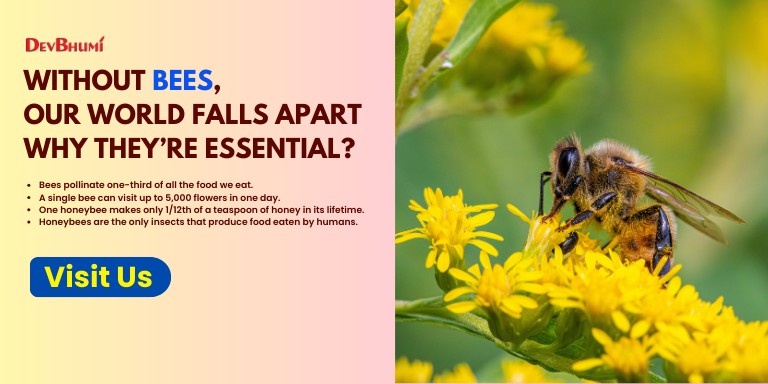
Nature’s Hardest Workers: How Bees Keep the Environment Alive
-
By: admin
- December 3, 2025
Why Bees Are Important for the Environment?
Bees may be small, but they have a massive impact on the health of our planet. They keep ecosystems alive, support our food systems, and maintain nature’s delicate balance. Here’s why bees are essential for the environment.
1. Pollination: The Power Behind Plant Life
Pollination is how plants reproduce, and bees are among the most efficient pollinators in the world.
They help fruits, vegetables, nuts, and countless wild plants grow. Nearly one-third of the food humans eat depends on pollination carried out by bees.
Without bees:
- Many crops would decline.
- Fruits and vegetables would become scarce and expensive.
- Wild plant species would struggle to survive.
Bees keep natural plant cycles alive, making them one of Earth’s most important workers.
2. Bees Strengthen Biodiversity
Healthy ecosystems require a wide variety of plant species, and bees help make that possible.
By pollinating different flowering plants, bees support diverse habitats:
- More plants → more insects
- More insects → more birds and mammals
- More wildlife → stronger ecosystems
Bees also act as environmental indicators. When bee populations decline, it’s a sign the environment is under stress.
3. Bees Support Food Systems & Human Livelihoods
Many of the foods we love — apples, almonds, berries, tomatoes — depend heavily on bees.
They also help grow crops used as animal feed, supporting dairy and livestock industries.
For millions of families globally, beekeeping provides income through honey, beeswax, and other bee products.
If bee populations collapse:
- Food prices would rise.
- Farmers would face major challenges.
- Rural economies would suffer.
4. Bees Provide Many Hidden Ecosystem Services
Beyond pollination, bees help the environment in multiple ways:
- Supporting plant growth that absorbs carbon and combats climate change
- Protecting soil from erosion through healthy plant roots
- Helping forests regenerate by pollinating flowering trees
- Maintaining balanced habitats for other species
Bees quietly strengthen the planet’s natural systems every single day.
5. Threats Bees Face Today
Bees are declining due to:
- Habitat loss
- Pesticide use
- Pollution
- Climate change
- Reduced plant diversity
A decline in bees means a decline in environmental stability. Saving bees is not just about helping one species — it’s about protecting our planet’s future.
6. How We Can Help Bees
You can support bees with simple, everyday actions:
- Plant bee-friendly flowers (especially native species)
- Avoid or reduce chemical pesticides
- Support local beekeepers
- Provide spaces for wild bees to nest
- Spread awareness in your community
Small actions create big impact when it comes to protecting pollinators.
Conclusion
Bees are essential for life on Earth. They help feed the world, protect ecosystems, and ensure nature continues to thrive. By caring for bees, we care for the environment — and for ourselves.
FAQs
Why are bees important for the environment?
Bees are vital pollinators that help plants reproduce. They support food crops, wild plants, biodiversity, and healthy ecosystems. Without bees, many plants and natural habitats would decline.
How do bees help humans?
Bees help grow fruits, vegetables, nuts, and many other crops. They also support livelihoods through honey production, beeswax, and beekeeping. Bees indirectly support livestock by pollinating animal-feed crops.
What would happen if bees disappeared?
Without bees, food production would drop significantly, plant diversity would shrink, and ecosystems would weaken. Many fruits and vegetables would become scarce and expensive, affecting global food security.
Why are bee populations declining?
Bee populations are decreasing due to habitat loss, pesticides, pollution, climate change, and reduced availability of flowering plants. These factors weaken bee health and limit their ability to survive.
How can we protect bees?
We can help bees by planting bee-friendly flowers, avoiding harmful pesticides, supporting local beekeepers, creating nesting habitats, and raising awareness about the importance of pollinators.
We want to give you 10% discount for your first order,
Use discount code at checkout

We want to give you 10% discount for your first order,
Use discount code at checkout
Written by
admin
The author has not added a bio yet.